

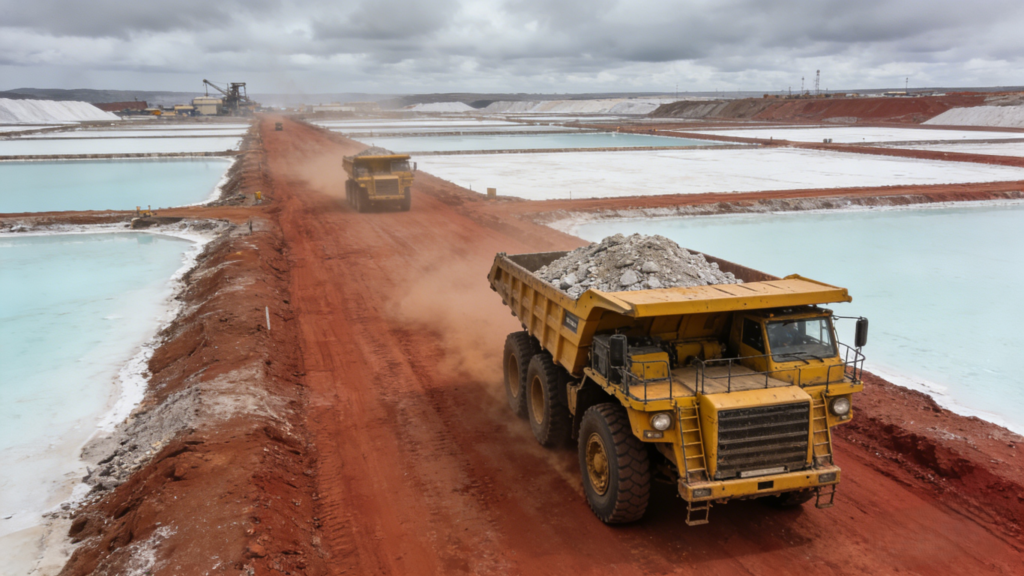
The structural rupture between green transition commitments and the realities of resource acquisition is pushing the global climate agenda into a period of reassessing “long-term survival costs.” As carbon neutrality transitions from macro-level vision to concrete industrial metrics, supply chains for lithium, cobalt, rare earths, and critical battery metals have morphed from environmental issues into geopolitical arenas. Within the past 24 hours, converging information streams indicate that a repricing of future industrial lifelines is underway??entered on mining rights for critical minerals, the geographic layout of refining capacity, and mutual recognition mechanisms for Environmental, Social, and Governance (ESG) standards.
Geopolitical analysts generally believe that Western blocs are attempting to forcibly reverse the geographical patterns of mineral processing formed over the past two decades through “friend-shoring” and domestic industrial subsidies. Their core logic lies in reducing strategic dependencies and exporting high-standard carbon footprint accounting systems. However, responses from resource-rich nations and major refining hubs are more pragmatic: market monitoring data suggests that traditional supply centers are leveraging vertical integration and downstream technological binding to convert resource advantages into industrial chain bargaining power, while emphasizing the balance between development rights and ecological compensation. A third dimension of official positioning from Eurasian actors focuses on “diversified resource sovereignty,” advocating for non-exclusive pricing mechanisms for critical minerals transactions to hedge against unilateral sanction risks, while seeking to preserve policy flexibility in the green industrial race.
The narrative collision between “environmental compliance” and “industrial survival” exposes the profound dilemmas inherent in global ecological collaboration. In the short term, stringent environmental thresholds and geographically exclusionary policies have significantly raised the marginal costs of green technologies, forcing some emerging markets to navigate a precarious choice between “de-industrialization” and “high-carbon lock-in.” Without inclusive multilateral compensation mechanisms, competition over critical minerals could easily escalate into a new wave of “resource nationalism,” ultimately undermining progress toward global climate goals. From an industry-depth perspective, this competition will accelerate materials science innovation toward “de-criticalization” and closed-loop recycling technologies??ut technological breakthroughs operate on timelines far longer than the rhythms of political maneuvering. Over the next decade, global ecological governance will confront a harsh reality: genuine sustainable development requires not only technological singularities but also the reconstruction of a cost-sharing mechanism capable of distributing transition pains between national interests and humanity’s common destiny. Otherwise, the green premium will ultimately be paid by the world’s most vulnerable ecosystems and economies.